
Erie County Release Paths
A release from Erie County custody can mean several different things. A person may walk out after bond, a court order, dismissal, or completion of a jail term. Custody may also move to another county, the Ohio Department of Rehabilitation and Correction, the U.S. Marshals Service, or an immigration authority. That second kind of event is an agency transfer, not freedom in the community. The Erie County Jail file and the court docket are the best pair of sources because one records the physical custody change while the other records the legal authority.
The live Sheriff-linked roster is built for current custody. A person who is released will usually cease to appear, but absence proves only that the current report does not show them. It does not supply a release time or destination. The underlying booking and release record can remain with the Erie County Sheriff's Office after the web row disappears. State prison discharges belong to ODRC, and a federal sentence belongs to the federal system. The right record follows the agency that actually held the person.
The 2025 Erie County Sheriff annual report supplies useful scale, but its figures must not be mislabeled as releases.
Bookings are events, not unique people, and the report does not call 3,588 a release count. The facility figure reflects the Erie research map, which separately includes two juvenile programs.
- Discharge
- The formal end of a custody term or supervision obligation.
- Time served
- A jail term has reached the length authorized by the court.
- Detainer
- A request by another authority to keep or receive the person.
- Transfer
- Custody changes agencies or facilities without ending.
Erie County Release Types
Erie release language matters because each result points to a different next source. Bond and recognizance releases let a case continue outside the jail under court terms. Dismissal or acquittal may support release, but only when no other case, warrant, or hold remains. Probation, called community control in many Ohio court records, is imposed by a court and differs from state parole. Judicial release is an Ohio sentencing-court process for a person who entered prison. Parole and post-release control follow state imprisonment and are tracked through ODRC and the Adult Parole Authority.
| Custody change | Meaning | Best next record |
|---|---|---|
| Bond or recognizance | Local custody ends while the case continues. | Jail release sheet and court bond entry |
| Time served | The authorized jail commitment ends. | Release timestamp and sentencing entry |
| Probation | The court orders community control. | Common Pleas or municipal court docket |
| ODRC transfer or discharge | State custody starts, changes, or ends. | ODRC offender detail record |
| Federal or ICE transfer | Another government authority receives custody. | County transfer record, then federal locator |
A deceased disposition also ends custody, but it must never be described as release to the community. Likewise, a populated Release Date on the roster can be useful evidence while the row remains posted, yet a future date is still a plan. Confirm that the event occurred and check whether the destination was another agency.
Erie County Release Records Field by Field
An Erie County release record should answer who was held, when the change occurred, who authorized it, and whether custody ended or moved. The jail manual requires staff to identify the person, complete release documentation, and check for warrants, holds, and detainers. For an agency transfer, the file can identify the receiving officer and agency as well as the time and authority. Those details are far stronger than a simple reply that someone is not currently held.
- Jail ID and booking date
- Links the request to the correct confinement.
- Release date and time
- Shows when Erie custody changed.
- Release authority
- Identifies the bond, court order, warrant, or other basis.
- Disposition or destination
- Separates community release from agency transfer.
- Court and case link
- Points to the journal entry or docket that explains the change.
- Booking photograph
- Provides the official intake image when law permits release.
The public roster carries Jail ID, name, charges, court, current disposition, bail, book date, arresting agency, a photograph, and a Release Date field. It does not expose the full jail-management record. Medical intake, Social Security numbers, emergency contacts, security data, and other protected material may be withheld. A focused request for public portions lets the custodian redact exempt fields without treating the entire file as unavailable.
Request Erie County Release Records
Send a narrow public-records request to the Erie County Sheriff's Office. Identify the full name, approximate booking date, and Jail ID or case number if known. Ask for the public parts of the booking/release or incarceration record, including the exact release date and time, authority, disposition or destination, court link, and booking photograph. Request electronic delivery and an estimate before any cost is incurred. The Sheriff's policy says ordinary records carry no fee except where otherwise noted, while media, postage, or video may be handled differently.
- Match the person to a booking date, Jail ID, or court case so the office can find the right file.
- Name the record series and each release field sought. Ask for redaction of exempt data instead of full withholding.
- Ask the correct clerk separately for the journal entry that authorized bond, sentence completion, transport, or dismissal.
- Keep the response, source date, and any stated reason for a redaction or denial.
2800 Columbus Avenue
Sandusky, OH 44870
Main: 419-625-7951
Jail Division: 419-627-7569
Ohio law calls for prompt inspection and copies within a reasonable period, not a fixed universal deadline. If the roster row is gone, ask whether the named record still exists under the Sheriff's retention schedule. Do not equate the brief life of a web report with legal destruction of the booking file.
Ohio Law for Erie County Releases
Ohio Revised Code 149.43 supplies the public-records baseline. Public jail facts may be produced while confidential personal data, security material, protected victim data, sealed records, and juvenile material are withheld. County retention schedules operate under ORC 149.38. The exact schedule series matters, so a requester should distinguish a release sheet, jail register, booking photograph, and video instead of assuming they share one retention term.
Ohio sealing and expungement rules in ORC 2953.32 through 2953.34 can restrict ordinary public access. Expungement means a record is destroyed, deleted, and erased as the statute directs; sealing limits public access while specified official access may remain. Eligibility and effect depend on the case and current law. An absent court result should not be rebuilt from cached copies. For an official outcome, contact the court that issued the order.
What Time Erie County Jail Releases
Erie County publishes a specific commitment-release rule. When the authorizing document gives no time, the jail schedules release for 5:00 a.m. on the date due. A three-day OVI commitment is measured as 72 actual hours from booking, not merely three calendar labels. The official commitment release-time policy is the source for both points.
That schedule does not override another lawful hold. Staff still verify identity, review release authority, and check warrant and detainer systems before an exit. A new court order or transfer instruction can change the outcome. The actual release timestamp in the jail record remains the proof that processing finished. No official policy supplies a public waiting area, pickup rule, transit voucher, or rideshare procedure, so release logistics should be confirmed with Jail Division rather than guessed.
Note: A scheduled Erie release time is planning information until the jail record shows the completed custody change.
How Erie County Bond Releases Work
Erie County bond routes vary by bond type and court. The Jail FAQ states that bond is generally paid by money order payable to the court, while the jail does not accept cash, check, or card for that general route. Personal-recognizance and surety bonds can be processed at the jail, subject to the court and any other holds. Felony cash bonds normally go through the clerk. Certain misdemeanor money-order bonds may be accepted after court hours under the jail schedule.
Vermilion Municipal Court is a local exception. Its bonds are handled at the court during business hours or through Vermilion Police after hours. At release, the person receives a Bond Release Information Form with court and condition details. Posting bond ends the jail hold for that case only. It does not decide guilt, end the prosecution, or cancel a separate warrant or detainer. The court receipt, release sheet, and later docket entries should be read together.
Erie County Release Property and Holds
The Erie jail manual links physical release to identity, property, and funds paperwork. Staff use the booking photograph and other identifiers, return property, and obtain a signature on the property and money form. Community-release funds are issued by debit card. When the person transfers to another agency, funds are issued by check. Property left after an ODRC transfer can be released to a person designated by the detainee within 14 days and is then discarded under the Jail FAQ.
Outstanding holds are checked before exit. For a record error, a useful correction request names the Jail ID, booking date, and court entry that supports the change. That gives the Sheriff a specific official record to compare. A third-party copy cannot change the county file. A complaint about missing or damaged property must be made in writing to the Jail Administrator within 48 hours under the published manual, while unknown-owner lost property has a separate 30-day rule.
Find Erie County Released Inmates
A reliable Erie County released inmate search moves from current custody to historical proof. Start with the Sheriff-linked New Inmate Roster only to see whether the person appears in the current report and to capture its run time. If absent, do not label the person released. Identify the court from prior roster or case data, then inspect the matching docket. Request the release sheet from the Sheriff when the exact time and destination matter.
- Check the Erie roster and note its report time, Jail ID, court, and any displayed Release Date.
- Read the correct court docket for bond, dismissal, sentence credit, transport, or community-control entries.
- Request the jail booking/release record for the historical timestamp and destination.
- Use ODRC only when Ohio prison custody or state supervision is plausible.
- Use VINE for a participating custody event and notification, then verify it against the originating record.
- Use BOP or ICE only when the county file points to federal custody.
Use the least personal data needed to separate same-name records. A middle initial, approximate age, Jail ID, case number, or ODRC number is more reliable than a photograph alone. Save the source URL, access date, and displayed update time.
Erie County ODRC Released Offender Search
The ODRC Offender Search covers people incarcerated in Ohio prisons, under Department supervision, or judicially released. It does not cover every former Erie County jail detainee. For a state-prison record, search a last name with the Released status and add Erie as county of commitment when useful. Open the detail result and compare the offender number, offense, court, status, release detail, and any supervision dates with the Common Pleas entry.
| Search field | Use | Local caution |
|---|---|---|
| Last and first name | Broad person search | Less restrictive criteria can work better. |
| Offender number | Exact state record | Does not equal the county Jail ID. |
| County of commitment | Filters by sentencing county | It may not be the person's residence. |
| Status | Incarcerated, Released, APA Supervision, or Violators at Large | Each status describes a different posture. |
| Hearing month | Finds a scheduled parole-board month | A hearing is not a release date. |
The official ODRC search screen shows the available release and supervision filters.
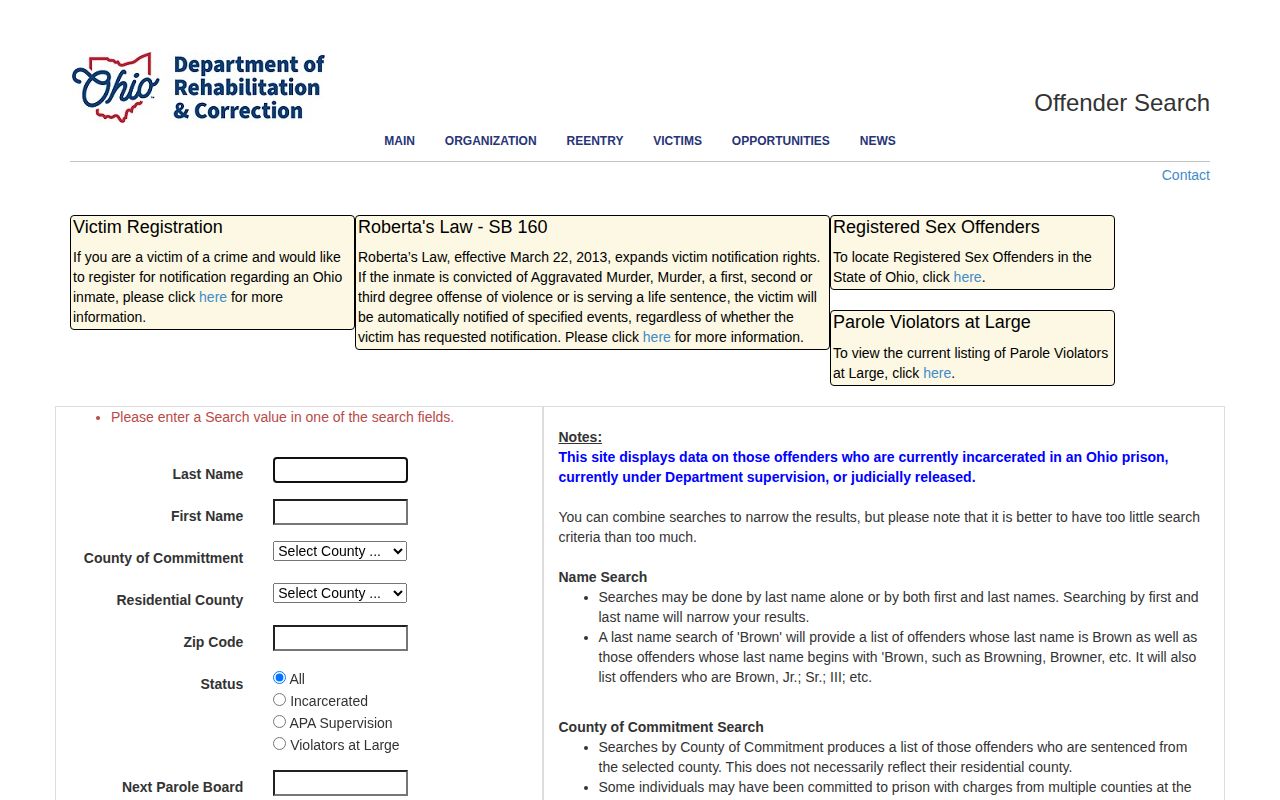
The image confirms that Released and APA Supervision are distinct choices, which helps prevent a current county-jail lookup from being confused with a state discharge search.
Erie County Roster Has No Release Archive
Erie County does not publish a separately labeled 24-hour or 72-hour release list. The JDS report is titled New Inmate Roster. It includes a Release Date field, but active rows reviewed during research had that field blank. The report run time is a snapshot time, not a promised refresh rate, and no posted rule explains how long a completed release row remains visible.
The official Sheriff page is the gateway to the roster and records policies.
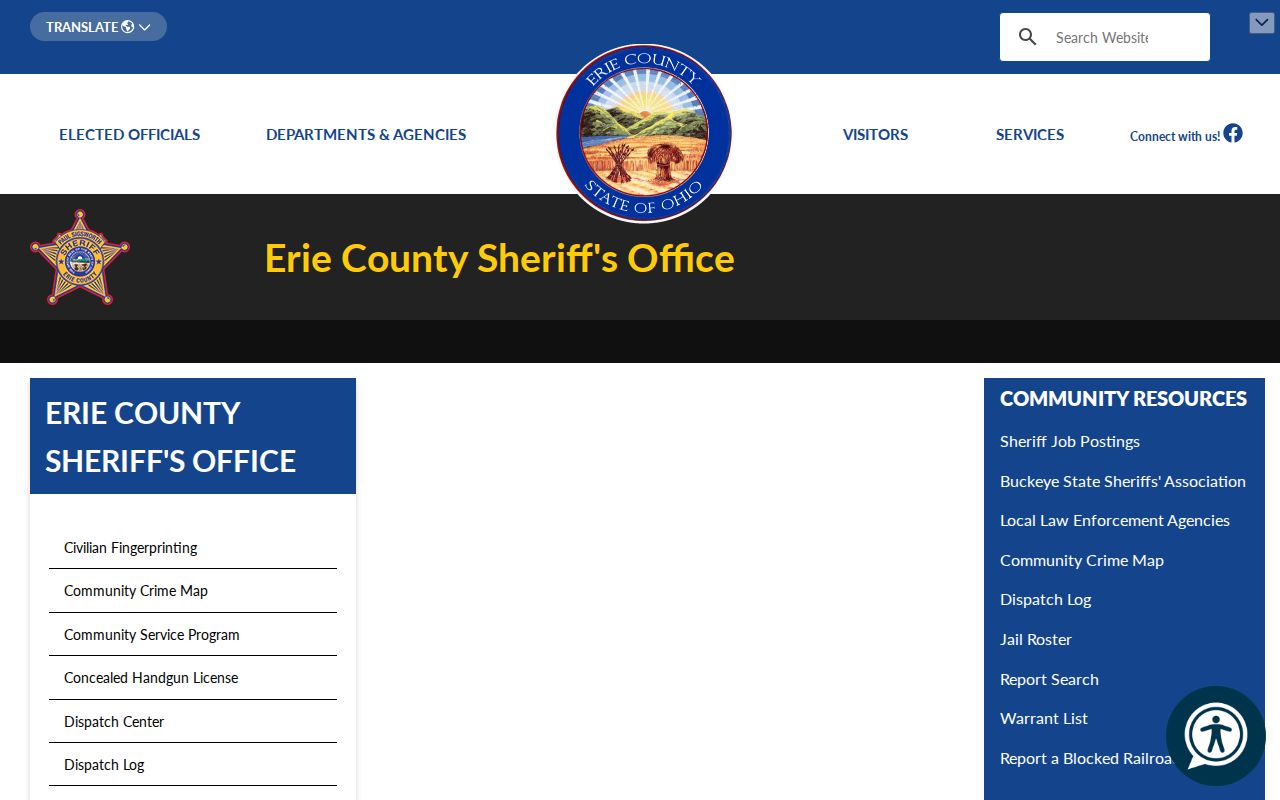
The Sheriff page points to current custody and public-record channels, so it should be used as a starting point rather than treated as a rolling release archive. The official iOS app lists tips, news, and alerts, but its public description does not verify an inmate, recent-release, or mugshot feature.
Erie County Release Court Paths
Erie County has several criminal-court routes. Felony matters generally lead to Common Pleas. Erie County Municipal Court has its own search and warns that online data may lag court action by at least 24 hours. Sandusky Municipal Court also appears in jail roster entries. The roster's Court field is therefore a routing key, not a minor detail.
The Common Pleas public case search provides the felony docket path.
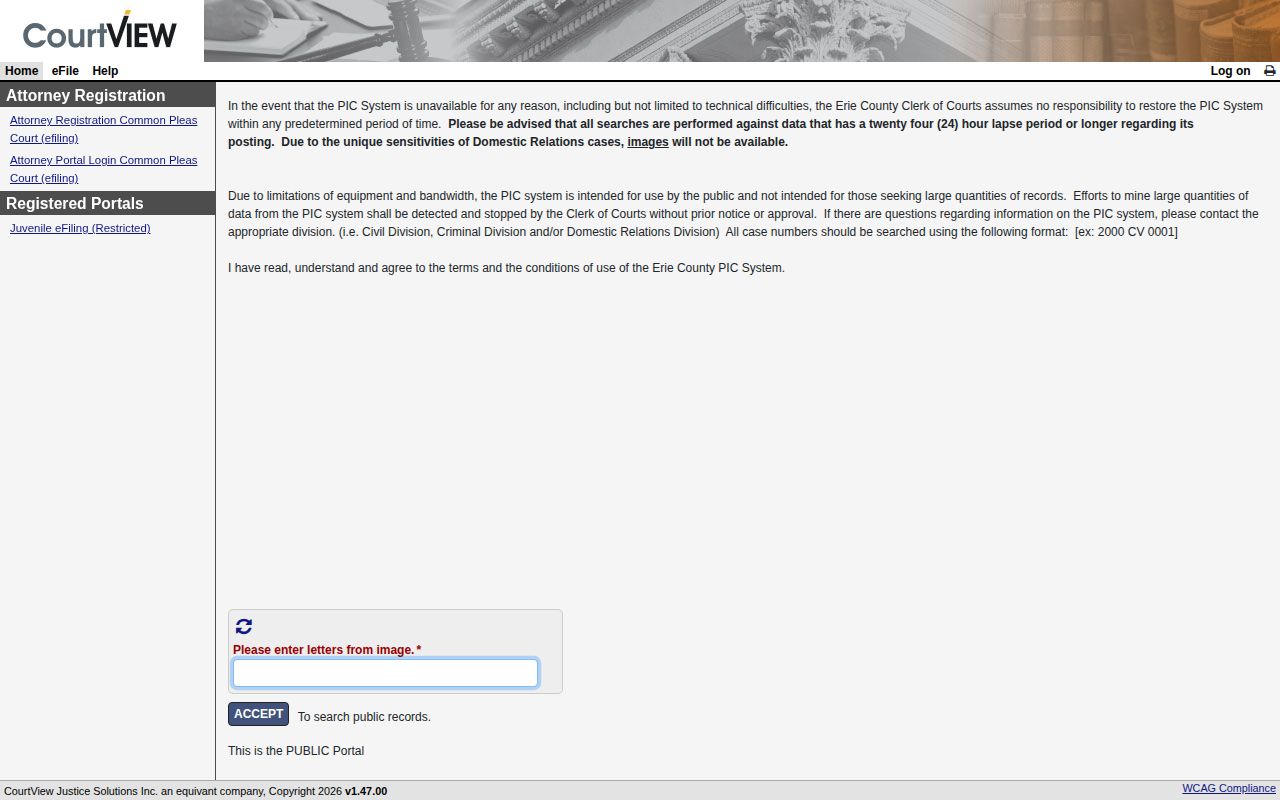
Read the chronological entries for bond, sentencing, time served, jail credit, transport, dismissal, judicial release, community control, and discharge. The court entry explains authority, while the jail sheet proves the actual custody-change time.
Note: Municipal web data may trail a signed order, so request verified information from the court when timing is critical.
Erie County Release Supervision and Alerts
Erie County Adult Probation supervises people placed on Common Pleas community control. A sentencing journal entry is the public verification anchor. State parole, post-release control, and many judicial-release cases belong to the ODRC Adult Parole Authority, where an APA Supervision result can show status and dates. These systems must not be collapsed. A person released from the county jail on local probation may never have an ODRC record.
Ohio VINE can provide a participating custody status and future event alert. It is useful when Erie’s current roster offers no release archive, but it is not a certified release record. Register on the correct person before the expected change and obtain the Sheriff or ODRC document afterward. More detail on the local and state distinction appears in Erie County post-release supervision.
Erie County Federal Release Transfers
If the Erie jail releases a person to USMS, ICE, or another federal authority, the local row may vanish even though custody continues. The jail manual states that when local charges are complete and a person is held for Border Patrol, ICE, or USMS, the federal agency is contacted and has 48 hours for pickup. Dropping the hold requires documentation, and release from the federal hold requires Jail Administrator or Sheriff authority.
The BOP Inmate Locator covers federal prisoners and many former federal prisoners in its data from 1982 forward. A released result may include a date. “Not in BOP custody” is broader and can also reflect USMS pretrial custody, transfer, or another status. The ICE Online Detainee Locator is designed for current immigration detention and recent releases within its stated window. Neither replaces Erie’s county transfer record, which is the bridge to the next system.
Erie County Released Versus In Custody
One system cannot answer every Erie release question. Start by deciding whether the person was held in the county jail, an Ohio prison, or federal custody. Then decide whether the need is current status, a future alert, or historical proof. That prevents an empty roster search from being mistaken for a discharge record.
| Source | Best use | What it cannot prove alone |
|---|---|---|
| Erie New Inmate Roster | Current county custody snapshot | Historical community release |
| Sheriff release sheet | Exact local custody-change time and destination | Later state or federal events |
| Court docket | Legal authority, sentence, bond, and case outcome | Exact physical exit time |
| ODRC Offender Search | Ohio prison release and APA status | County-only jail release |
| Ohio VINE | Participating status and future alerts | Certified historical record |
| BOP or ICE locator | Relevant federal custody path | Erie jail release reason |
Use the source that matches the last verified custodian. A court order may authorize release while the jail record supplies the completed exit time and destination.
Erie County Release Facilities
Erie County Jail is the county's only adult detention facility identified in the research. It handles local adult custody and can release a person to the community or transfer custody to another authority. The Erie County Detention Center is a temporary juvenile facility. Northern Ohio Juvenile Community Corrections Facility is a youth program serving participating courts. Neither juvenile facility belongs in an adult released-inmate search.
- Erie County Jail: confirm a local release with the jail sheet and correct court docket.
- Erie County Detention Center: release or placement changes occur through Juvenile Court authority, with confidential records.
- Northern Ohio Juvenile Community Corrections Facility: discharge or placement follows the youth's court order and program plan.
No ODRC prison, federal correctional institution, or dedicated ICE detention center was identified inside Erie County. Lake Erie Correctional Institution is in Ashtabula County despite its name. Adult ODRC, BOP, and ICE tools should be used only when the record shows that custody entered those systems.